 Date:27-12-19
Future of India’s Green Fund From Coal
ET Editorials
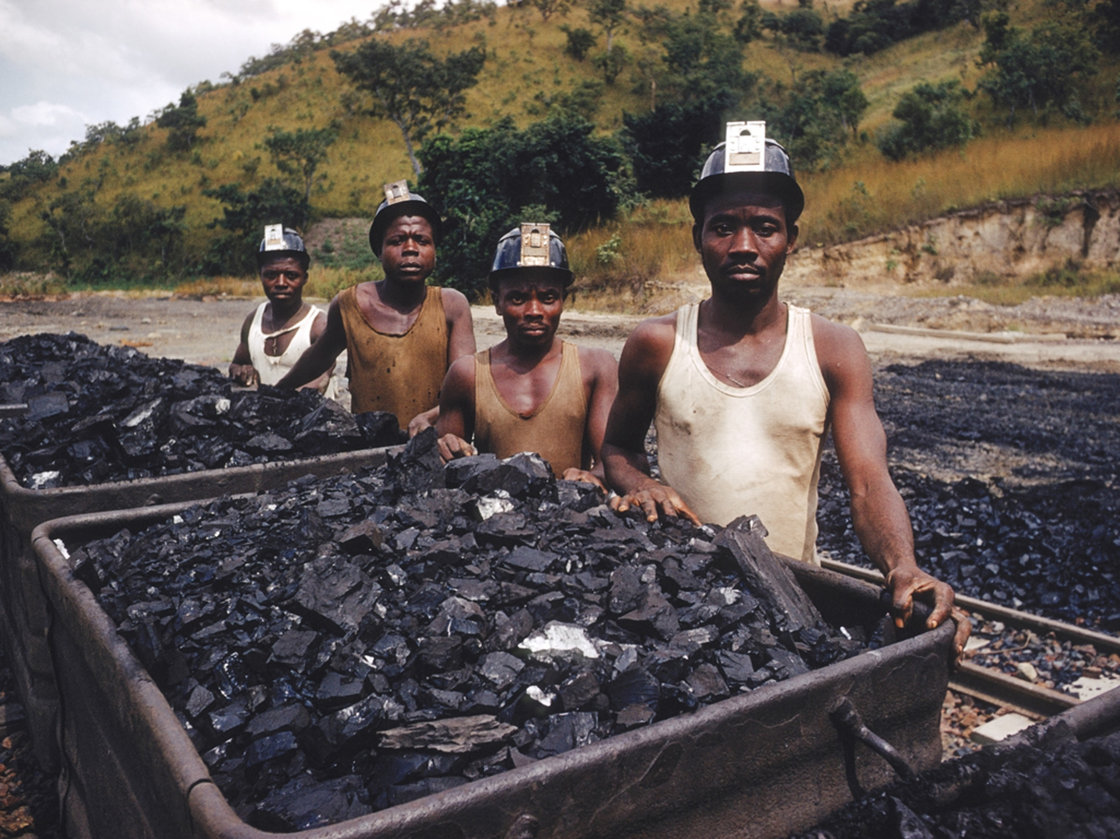
Ideally, the proceeds of the coal cess should be used to finance clean energy and climate-related projects. However, the government has decided to utilise coal cess funds to compensate states for any goods and services tax (GST) shortfall. At least after the five-year period for which the government is committed to compensating the states for a shortfall in their indirect tax collection, the funds should be utilised exclusively for such purposes.
That period ends in 2022. The coal cess, based on the principle of polluter pays, was introduced in 2010 and levied on domestic and imported coal. The cess accrues to the National Clean Energy and Environment Fund (NCEEF), and is an effort to tax carbon for its externalities and serve as a steady source for funding clean energy projects.
The tussle between immediate economic challenges and the demands of transitioning to a sustainable development path confronts many developing economies. Countries will need to step up their efforts to slow down global warming over the next decade.
A commitment that funds collected as coal cess will be used, come 2022, exclusively for financing the country’s transition to a low-carbon and sustainable economy will be timely. India has committed to adding 175 GW renewable capacity by 2022 and then ramp it up to 450 GW. This will require higher flow of funds. The government could raise the cess, thereby creating a corpus for the NCEEF in 2022. The cess has risen from Rs 50 per tonne in 2010 to Rs 200 per tonne in 2015 and to `400 per tonne in 2016. The coal cess collected between 2010-11and 2017-18 amounted to Rs 86,440.21crore.
Of this, Rs 29,645.29 crore was transferred to the NCEEF. Of this, sadly, only Rs 15,911.49 crore has been disbursed. Given the funds crunch, it makes sense to divert coal cess funds for a vital non-green purpose. That should be temporary.
 Date:26-12-19
Mind the gap
A rounded approach is necessary to ensure women’s access to resources, opportunities
Editorial
Assessing women’s access to equal opportunity and resources against the access that men have would be a scientific way of evaluating a nation’s commitment to the advancement of its citizens. But going by the World Economic Forum’s Global Gender Gap Index 2020, released last week, questions can easily be raised about whether this government is doing the right thing by the country’s women. India has dropped four points from 2018, to take the 112th rank on the Index. The Index measures the extent of gender-based gaps on four key parameters — economic participation and opportunity, educational attainment, health and survival, and political empowerment. Notably, it measures gender-based gaps in access to resources and opportunities in countries, rather than the actual levels of the available resources and opportunities. Despite a small score improvement, India has lost four positions as some countries ranked lower than India have shown better improvement. The country has reportedly closed two thirds of its overall gender gap, with a score of 66.8%, but the report notes with concern that the condition of women in large fringes of Indian society is ‘precarious’. Of significant concern is the economic gender gap, with a score of 35.4%, at the 149th place, among 153 countries, and down seven places since the previous edition, indicating only a third of the gap has been bridged. The participation of women in the labour force is also among the lowest in the world, and the female estimated earned income is only one-fifth of male income. An alarming statistic is India’s position (150th rank) on the very bottom of the Health and Survival subindex, determined largely by the skewed sex ratio at birth, violence, forced marriage and discrimination in access to health. It is on the educational attainment (112th rank) and political empowerment (18th rank) fronts that the relative good news is buried.
There is no question that the Gender Gap Index presents India with an opportunity to make the necessary amends forthwith. Doing what the government is currently doing is clearly not going to be sufficient; it needs to engage intimately with all aspects indicated by the Index to improve the score, and set targets to reduce the gender gap in the foreseeable future. It will have to drastically scale up efforts it has introduced to encourage women’s participation, and increase opportunities for them. To do so it also needs to make sure there is actual implementation at the ground level. While a good score on any global index is a target worth pursuing, what is being questioned here is basic — is the state reneging on its commitment to half its population? A commitment to ameliorate the conditions for women is a non-negotiable duty of any state.

कोई टिप्पणी नहीं:
एक टिप्पणी भेजें